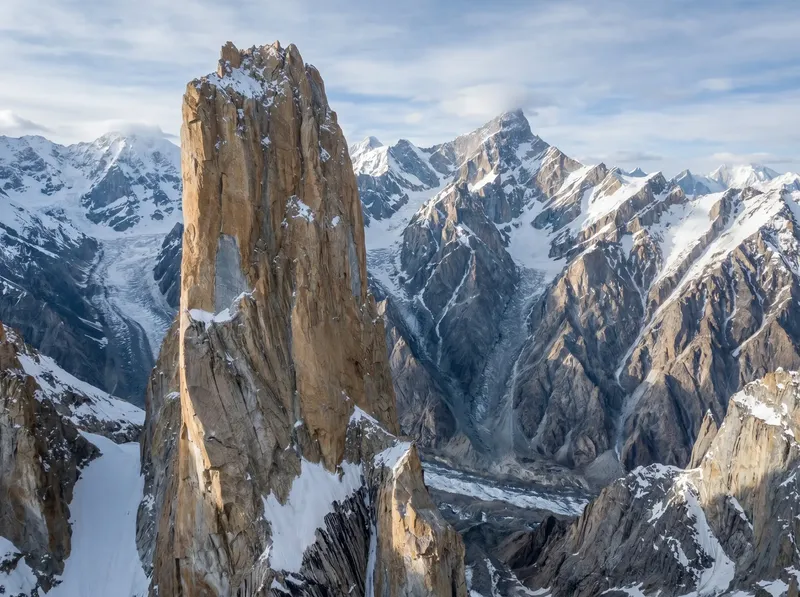
Mountain K2

Trekking — Askole Region

K2 Base Camp & Gondogoro La Trek | Local Guide

Askole Region — 5,585 m

Duration
21 days
Max Altitude
5,585 m
Difficulty
Hard
Group Size
5 - 10 people
Season
Summer / Autumn

Adventure Overview

K2 Base Camp and Gondogoro La Trek with an Askole Local Team

This 21-day K2 Base Camp and Gondogoro La trek in Pakistan is the full Karakoram journey: Islamabad, Skardu, Askole, the Baltoro Glacier, Concordia, K2 Base Camp, Ali Camp, Gondogoro La Pass, Khuspang, Saicho, Hushe and back to Skardu. It is a hard, high-altitude trek, but it is also our home route. Our team is based in the same valleys that carry this expedition season after season, so guests travel with people who know the trail, the weather, the camps, the porters, and the small decisions that make the journey safer and more personal.

We run this trek as a local Balti operator, not as a reseller passing the trip to someone else. Your guide, cook, camp crew, jeep drivers and porter team are organized directly by K2 Expeditions & Trekking from Askole and Skardu. That means clearer communication, fairer local employment, and a route plan shaped by people who have grown up around the Baltoro and the approach to K2.

The Route

The trip begins with a welcome in Islamabad and a scenic mountain flight to Skardu, the gateway to the Karakoram. From Skardu we drive by 4x4 through the Shigar and Braldu valleys to Askole, the last permanent village before the wilderness. Once the trek begins, the trail follows the classic Baltoro Glacier approach through Jhula, Paiju, Khoburtse, Urdukas and Goro II before reaching Concordia, one of the great mountain viewpoints of the world.

From Concordia we continue to K2 Base Camp and the Art Gilkey Memorial, standing below K2, Broad Peak, the Gasherbrums, Masherbrum and the surrounding glacier systems. After returning toward Concordia, the team moves to Ali Camp for the alpine start over Gondogoro La Pass at 5,585 m. The pass is demanding and conditions can change quickly, but in suitable weather it gives one of the finest dawn panoramas in the Karakoram before descending into the Hushe Valley.

Why Trek With K2ET

  • Askole and Skardu operations: local guides, porters, cooks and drivers coordinated directly by our team.
  • Full expedition logistics: permits, CKNP fees, hotels, domestic flights, jeep transfers, camping equipment, meals and porter support arranged before you arrive.
  • Gondogoro La support: fixed-rope coordination when required, safety briefings, group first-aid, oxygen and satellite communication for remote sections.
  • Small-group approach: normally 5 to 12 trekkers, with careful pacing for acclimatization and a guide team that knows when to move, wait or adjust.
  • Local cultural connection: time in Askole, Skardu and Hushe with a Balti team that welcomes guests as people, not booking numbers.

A Personal Note From The Guide

Guiding trekkers to K2 Base Camp and across Gondogoro La is always special. The views, the culture, and the feeling of standing among the world’s highest peaks make this trek truly unforgettable. We welcome every guest like family.

Suitable For

Who This Trip Is For

This trek is best for strong hikers, experienced trekkers, photographers, mountaineering enthusiasts and private groups who want the full Baltoro, K2 Base Camp and Gondogoro La experience with a local Pakistani operator. You do not need to be a technical climber, but you should be comfortable walking for long days on rocky moraine, glacier, loose trail and snow when conditions require it.

It is also suitable for first-time Karakoram trekkers who already have good mountain fitness and are willing to train seriously before arrival. The trip is not designed as a casual sightseeing tour. The route reaches 5,585 m, includes remote camping, basic mountain conditions, and an early-morning pass crossing where patience and teamwork matter as much as speed.

Route Notes

Additional Trip Detail

Highlights

Route Highlights

A complete Baltoro trekking journey from Askole to K2 Base Camp, with the option to cross Gondogoro La when conditions and team strength allow.

  • Walk through Paiju, Urdukas, Goro II, Concordia, and the upper Baltoro Glacier.
  • Visit the K2, Broad Peak, Gasherbrum, and Chogolisa viewpoints around Concordia.
  • Finish through Hushe Valley after the Gondogoro La crossing when the pass is open.

Terrain

Terrain and Route Notes

The route moves from jeep road and moraine trails into long glacier days on the Baltoro. The Gondogoro La section is steep, exposed, and condition-dependent, so the guide team may switch to an out-and-back K2 Base Camp plan if the pass is unsafe.

Pacing

Acclimatization Notes

The itinerary uses progressive altitude gain and rest or shorter movement days around Paiju, Urdukas, and Concordia. Trekkers should arrive with strong hill fitness and previous multi-day trekking experience.

Camp Life

Accommodation and Meals

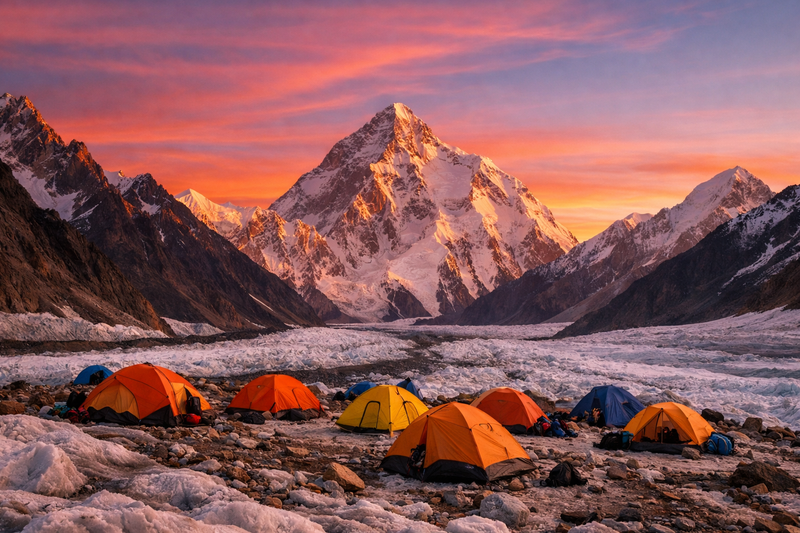
Hotels are used in Islamabad and Skardu where available. On trek, the team uses tented camps, a mess tent, cooked meals, boiled water routines, and porter-supported baggage movement.

Support

Guides, Porters, and Local Support

The operation is coordinated through Askole and Skardu with local guides, porters, cooks, and camp staff. Porter loads, camp movement, and route decisions are handled locally each day.

Equipment

Gear and Equipment Notes

Bring a warm sleeping bag, broken-in trekking boots, layered clothing, sun protection, microspikes or light traction if advised, and a personal first-aid and blister kit.

Departures

Dates & Availability

Expedition Price

USD 5,990

Per person. Final route logistics are confirmed with our operations team before deposit.

Listed Dates

4

Seats Open

6

Departure Dates

Choose a confirmed departure

Next Available

Aug 5, 2026

Availability updates automatically as booking requests are confirmed.

Itinerary

Day-by-Day Route Plan

Route Span

Days 1-21

Opening Stage

Day 1: Receive Guests

Final Stage

Day 21: Departure from Islamabad

  1. Day01Receive GuestsDaily route segment

    Upon arrival at Islamabad International Airport, you will be warmly welcomed by our expedition representative. After transfer to your hotel, you can relax from your international journey. In the evening, a comprehensive briefing session will introduce you to the trek logistics, safety procedures, equipment checks, permits, and cultural guidelines for Pakistan. This meeting ensures every participant is fully prepared for the remote wilderness adventure ahead.

  2. Day02Fly to SkarduDaily route segment

    Today features one of the most scenic mountain flights in the world. If weather permits, the aircraft flies parallel to the Himalayan and Karakoram ranges, often offering aerial views of Nanga Parbat (8,126m). Upon arrival in Skardu, the gateway to the Karakoram, you will immediately feel the shift in landscape — rugged mountains, desert valleys, and turquoise rivers define the region. The afternoon is free for rest, hydration, and light walking to aid acclimatization.

  3. Day03Jeep Safari to Askole Village (3000 m/ 9842 feet)Daily route segment

    The journey to Askole, the last permanent village before entering the Karakoram wilderness, is an unforgettable off-road adventure. Traveling along the Shigar Valley, the jeep navigates narrow mountain tracks, rocky passes, and shallow river crossings. The Braldu River flows alongside, framed by cliffs, waterfalls, and hanging glaciers. Villages dot the valley, giving a glimpse of local Balti life: men guiding yaks and donkeys, women in colorful traditional dress, and children waving as you pass. Upon arrival at Askole, the team meets the local porters. After distributing loads, participants settle into their tents, ready for the first day of trekking. Askole is our home ground, and this is where the mountain operation truly begins.

  4. Day04Askole to Jhula (3,200 m / 10,500 ft)Daily route segment

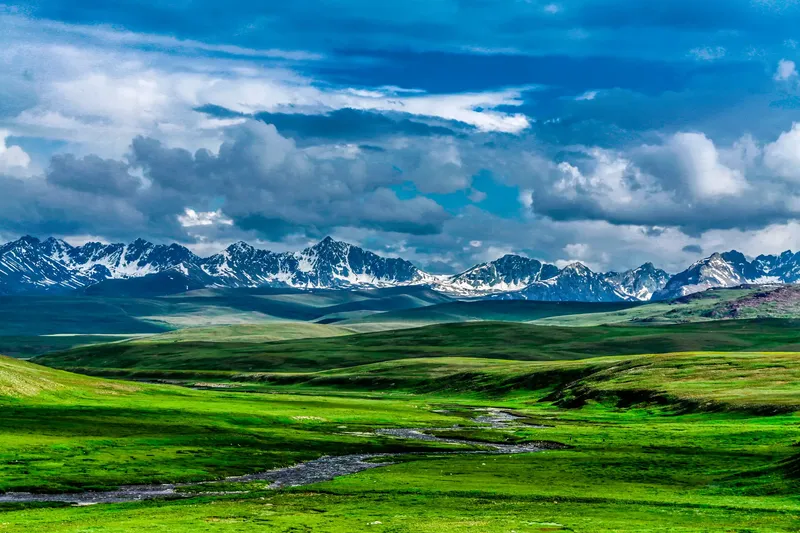
    The trek officially begins along the Braldu River, through wide valleys of sand, boulders, and sparse vegetation. The terrain gradually ascends, revealing distant snow-capped peaks. Glacial streams cross your path, and towering cliffs line the valley walls. The journey to Jhula allows trekkers to adjust to high altitude while enjoying dramatic views of the surrounding Karakoram giants. Camp is set beside small streams, with the kitchen team preparing hot meals, offering a glimpse of alpine life.

  5. Day05Jhula to Paiju Camp (3,400 m / 11,150 ft)Daily route segment

    The path to Paiju introduces your first major glacier vistas. Snow peaks glint in the sunlight as you traverse moraine and small river crossings. Paiju is nestled beneath towering cliffs and the glacier’s edge, offering an awe-inspiring view of Paiju Peak and the distant icefall. Trekking along lateral moraines, you gain a sense of scale: these mountains dwarf anything seen at lower elevations. At night, enjoy traditional hot meals, while the clear Karakoram sky reveals stars that seem close enough to touch.

  6. Day06Rest & Acclimatization at Paiju (3,400 m / 11,150 ft)Daily route segment

    Today is dedicated to acclimatization at Paiju Camp, crucial for safe glacier trekking ahead. Participants can take short walks to explore nearby glacial streams, practice trekking on small moraine ridges, and observe the local wildlife, including ibex and Himalayan marmots. Porters organize equipment for the next days on Baltoro Glacier. Guides provide instruction on high-altitude trekking techniques, snow travel, and safety on glaciers. This rest day ensures your body adjusts to increasing altitude, preparing for the ascent toward K2 Base Camp.

  7. Day07Paiju to Khoburtse (3,800 m / 12,467 ft)Daily route segment

    Entering the Baltoro Glacier region, you traverse a mixture of moraine and rocky paths. The peaks of Trango Towers, Cathedral Peak, and Masherbrum begin to dominate the skyline. Khoburtse Camp is strategically located on a moraine ridge overlooking the glacier. Here, the size of the glaciers becomes apparent, with crevasses and ice formations stretching endlessly. Participants begin learning glacier travel skills and safety protocols from guides.

  8. Day08Khoburtse to Urdukas (4,050 m / 13,287 ft)Daily route segment

    Trekking along the Baltoro Glacier, you encounter towering ice seracs and jagged rock spires. Urdukas Camp is positioned near the convergence of lateral moraines and offers a panoramic view of Masherbrum and other Karakoram giants. The path is mostly moraine walking, with occasional glacier crossings. Guides provide insights into the glacial environment, explaining ice movement and formation. Evenings are spent sharing stories of mountaineering history around campfires under the star-filled sky.

  9. Day09Urdukas to Goro II (4,250 m / 13,944 ft)Daily route segment

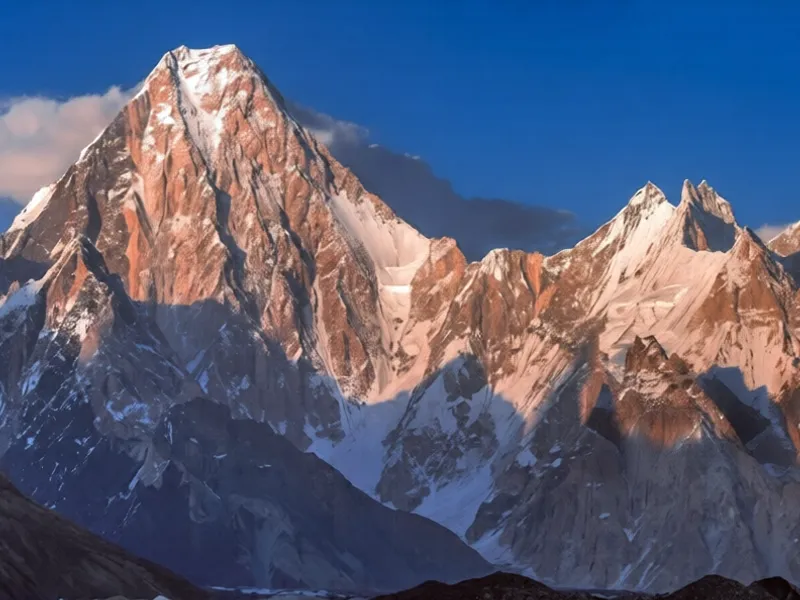
    Goro II Camp lies on the Baltoro Glacier, surrounded by peaks such as Broad Peak and Gasherbrum IV. Trekking over uneven moraine and glacial ice, you feel immersed in a frozen world sculpted over millennia. The route requires careful navigation around crevasses and ice ridges, providing hands-on experience in glacier trekking under the supervision of expert guides. The scale of the mountains and the isolation of the camp bring a profound sense of adventure and accomplishment.

  10. Day10Goro II to Concordia (4,650 m / 15,255 ft)Daily route segment

    The journey to Concordia is one of the most awe-inspiring in the world. Concordia, the junction of Baltoro, Godwin-Austen, Gasherbrum, and Vigne Glaciers, offers a 360° view of several 8,000-meter peaks. K2, Broad Peak, Gasherbrum I–IV, and Masherbrum surround the campsite. The walking path crosses gently sloping glacier ice, interspersed with moraine ridges. Evening at Concordia is magical: the golden light on jagged peaks and icefalls is unforgettable.

  11. Day11Concordia to K2 Base Camp (5,150 m / 16,896 ft)Daily route segment

    Following the Godwin-Austen Glacier, the final approach to K2 Base Camp is both challenging and exhilarating. The surrounding peaks appear closer each step, and the atmosphere of the base camp, combined with the historical significance of the Gilkey Memorial, is profound. Participants experience the extreme beauty of K2, feeling the enormity of the mountain and the power of the glacier. Camp is set, meals prepared by our team, and participants rest in preparation for the Gondogoro La crossing.

  12. Day12Return to Concordia (4,650 m / 15,255 ft)Daily route segment

    Retracing the glacier path, you return to Concordia to prepare for the ascent of Gondogoro La. The descent offers new perspectives on peaks such as Gasherbrum IV and Broad Peak, highlighting glacier crevasses and ice formations not visible during the previous ascent. Guides discuss snow and ice travel techniques, ensuring all participants are confident for the next day’s high pass.

  13. Day13Concordia to Ali Camp (4,950 m / 16,240 ft)Daily route segment

    Departing from Concordia, you head toward Ali Camp, the staging point for the Gondogoro La Pass. The terrain becomes increasingly rugged, with glacier moraine and rocky debris defining the path. On the way, trekkers witness stunning views of Gasherbrum IV, Broad Peak, and Masherbrum, their snowy summits towering dramatically above the glacier. The team navigates carefully across crevassed sections and snow patches, while guides teach techniques for trekking on glacial moraine. Ali Camp itself is perched on a rocky ridge with panoramic views, offering a dramatic and exhilarating camp setting. The evening is spent preparing for the alpine challenge of Gondogoro La, checking ropes, crampons, and other technical equipment.

  14. Day14Ali Camp to Gondogoro La Pass (5,585 m / 18,320 ft) to Khuspang (4,680 m / 15,354 ft)Daily route segment

    The day begins in the early hours, usually around 1–2 AM, to ensure safe passage over Gondogoro La, one of the most dramatic high-altitude passes in the Karakoram. Ascending steep snow slopes under the guidance of expert mountaineers, trekkers rely on fixed ropes installed on the pass. Every step demands focus and endurance, as the altitude and thin air make the climb physically demanding. At the summit, the views are unparalleled: K2, Broad Peak, Gasherbrum I–IV, and Laila Peak stretch across the horizon, glowing in the golden hues of sunrise. The descent to Khuspang is equally challenging, requiring careful navigation of snow and rocky terrain. By late afternoon, the team arrives at Khuspang Camp, nestled in a high alpine valley. Here, the sense of accomplishment is profound, having crossed one of the most iconic passes in the world. Our local team makes the final call on the pass according to snow, rope, weather and group condition.

  15. Day15Khuspang to Saicho (3,430 m / 11,253 ft)Daily route segment

    Descending from the high alpine environment of Gondogoro La, trekkers enter lush Hushe Valley landscapes, where green alpine meadows replace snow and ice. The trail follows small streams and meandering trails between moraine ridges. Along the way, participants observe the transition from rugged glacial terrain to fertile highland pastures dotted with small huts and herding communities. The hike is physically less demanding than the previous day but requires steady trekking to maintain balance along rocky descents. The evening at Saicho provides comfortable camp surroundings and an opportunity to relax muscles after the challenging Gondogoro La ascent.

  16. Day16Saicho to Hushe Village (3,050 m / 10,006 ft)Daily route segment

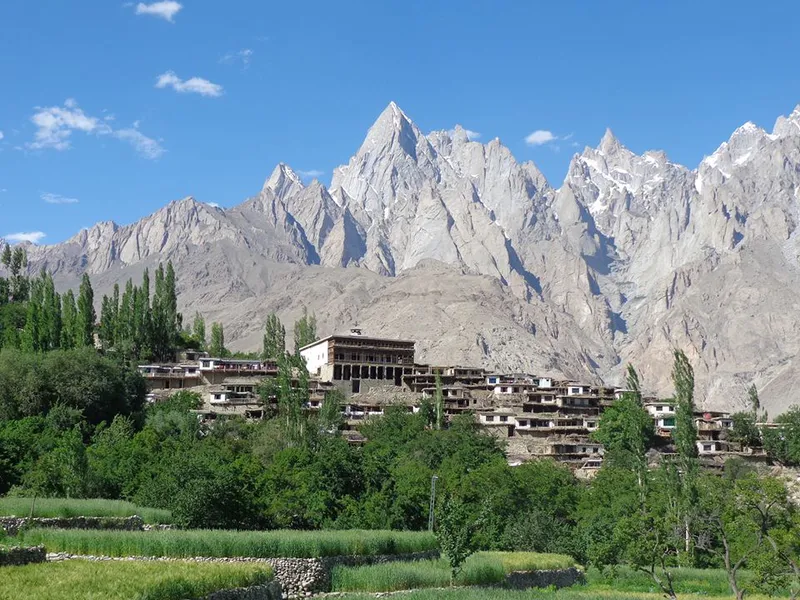
    The trek continues downhill through picturesque alpine trails to Hushe Village, the largest settlement in the valley. The journey is rich in cultural experiences, as trekkers see traditional Balti houses, yak grazing, and villagers engaged in farming and daily chores. The mountains gradually recede behind, while greenery and rivers dominate the landscape. Camp is set near the village, allowing trekkers to enjoy the calm and comfort of lower altitudes and prepare for the return journey by jeep.

  17. Day17Jeep Transfer: Hushe to Skardu (2,228 m / 7,310 ft)Daily route segment

    After breakfast in Hushe, we say goodbye to the trekking crew and drive by 4x4 through the Hushe and Khaplu valleys toward Skardu. The road follows rivers, farms and small Balti villages, slowly bringing us back from the remote mountain world into town. On arrival in Skardu, the team checks into the hotel, washes gear, rests properly and enjoys a hot meal after the long days on trail.

  18. Day18Rest & Acclimatization in Skardu (2,228 m / 7,310 ft)Daily route segment

    A full rest day in Skardu allows trekkers to recover from the high-altitude expedition. Guests can enjoy the comfort of a hotel, walk in the town’s markets, or explore nearby scenic points such as Shigar Fort or the Indus River valley. Guides provide debrief sessions, share expedition photos, and discuss trekking highlights. This day is essential for rest and rehydration before the domestic flight to Islamabad. The combination of comfort, culture, and relaxation helps participants recover physically and mentally while still experiencing the beauty of the Karakoram region.

  19. Day19Skardu to Islamabad (540 m / 1,770 ft) via FlightDaily route segment

    After breakfast, take a domestic flight back to Islamabad. The flight often provides spectacular views of the Karakoram peaks from the air, offering a unique perspective of the glacier systems and mountain valleys trekked over the past two weeks. Arrival in Islamabad marks a transition from rugged wilderness to urban civilization, and participants are transferred to their hotel for a well-deserved evening of rest.

  20. Day20Departure Preparation & Farewell DinnerDaily route segment

    Final day to relax and prepare for departure. A farewell dinner is arranged to celebrate the successful completion of the 21-day adventure. Participants have the chance to exchange stories, share photographs, and honor the local guides and porters who supported the expedition.

  21. Day21Departure from IslamabadCompletion day

    After breakfast, the expedition team transfers you to Islamabad International Airport for your onward journey. Trekkers leave with memories of towering peaks, massive glaciers, cultural immersion, and the unforgettable experience of having completed one of the most iconic high-altitude treks in the world.

Field Planning

Difficulty, Safety & Permits

Physical Requirements

Difficulty & Preparation

Difficulty level: Hard. Most trekking days involve 5 to 8 hours of walking, with longer days around K2 Base Camp and Gondogoro La. The pass crossing normally starts around 1:00 to 2:00 AM so the team can move on firmer snow and cross before the sun softens the slopes. The maximum altitude is 5,585 m at Gondogoro La Pass.

  • Train for steady uphill walking, long descents and back-to-back trekking days for at least 10 to 12 weeks before departure.
  • Arrive with broken-in trekking boots, layered clothing, waterproof shell, warm gloves, headlamp, trekking poles and a sleeping bag suitable for cold nights.
  • For Gondogoro La, a harness and crampons may be required depending on conditions. We confirm the final technical gear list before departure.
  • Hydration, slow pacing and honest communication with the guide are essential. Our itinerary includes acclimatization time at Paiju and recovery time in Skardu.

Operations

Safety & Logistics

Safety on this route comes from local judgement, realistic pacing and clean logistics. Our guide team monitors weather, glacier conditions, porter movement, camp placement and guest health each day. We carry a group first-aid kit, oxygen for altitude-related emergencies and satellite communication for remote areas where mobile signal is not available.

Gondogoro La is only attempted when conditions allow. Fixed ropes are coordinated when required, and the team checks personal equipment before moving from Ali Camp. If weather, snow, rockfall risk or group health makes the crossing unsafe, the guide has authority to adjust the plan. In the Karakoram, a good decision is more important than forcing an itinerary.

Documentation

Permits & Local Operations

K2ET arranges the required trekking permits, Central Karakoram National Park entry permissions, route documentation, environmental and camping fees, and the visa support letter for travelers who need an invitation letter for their Pakistan visa. We also coordinate hotel nights in Islamabad and Skardu, airport transfers, domestic flights, jeep transfers, camp setup and porter support.

Domestic flights between Islamabad and Skardu are weather dependent. If flights are cancelled, the team will advise the safest practical alternative according to the situation. Each trekker can normally give up to 20 kg of personal duffel to the porter system, while keeping daily essentials in a small daypack.

What's Covered

Inclusions & Exclusions

Included

  • The package includes all required trekking permits, CKNP entry permits, government environmental and camping fees, official route documentation, and a Pakistan visa support letter or Letter of Invitation. The trek is led by a licensed English-speaking local guide, with assistant guides for larger groups, high-altitude support staff, a cook and kitchen crew, and experienced Balti porters carrying personal duffel bags up to 20 kg per trekker. Gondogoro La fixed-rope installation and crossing support are also included where applicable.
  • Accommodation includes twin-sharing four-season trekking tents, a dining tent with tables and chairs, a fully equipped kitchen tent, and a separate toilet tent. Hotel accommodation in Islamabad and Skardu before and after the trek is also included.
  • All meals during the trek are provided, including breakfast, lunch, and dinner, with a mix of Balti and continental dishes. Tea, coffee, boiled drinking water, a welcome dinner, and a farewell dinner are also included.
  • Transportation includes Islamabad airport transfers, return domestic flights between Islamabad and Skardu subject to weather conditions, four-wheel-drive transport between Skardu and Askole, and transport between Hushe and Skardu with experienced local drivers.
  • Safety and technical support include fixed ropes on Gondogoro La when required, a group first-aid kit, satellite communication equipment, an emergency oxygen cylinder, and basic climbing and glacier-crossing assistance.
  • Technical & Safety Equipment: For safety during challenging mountain crossings, certain group technical equipment is provided. This includes fixed ropes installed on Gondogoro La Pass (when required) to assist trekkers during the steep ascent and descent. The expedition team carries a comprehensive group first-aid kit for treating minor injuries or altitude-related issues. A satellite communication device is also carried by the guide to maintain contact in remote mountain areas where mobile networks are unavailable. For emergencies, an oxygen cylinder is available for altitude-related complications, and basic climbing safety support is provided during the Gondogoro La pass crossing when necessary.
  • The package also covers group camping and kitchen equipment, transportation and portage of expedition equipment, waste-management arrangements, insurance for expedition staff, government taxes, service charges, and all operational and logistical costs related to the trek.

Not Included

  • Insurance: All trekkers are required to arrange their own personal travel insurance, which is mandatory for participation in the expedition. The insurance policy must include coverage for high-altitude trekking up to at least 6,000 meters, as well as emergency evacuation and helicopter rescue services. Coverage for trip cancellation or interruption is also strongly recommended in case unexpected circumstances affect your travel plans.
  • Personal Equipment: Trekkers must bring their own personal trekking equipment suitable for high-altitude conditions. This includes items such as a warm sleeping bag rated to at least –15°C, trekking boots, insulated clothing, gloves, hats, and other personal trekking gear. Depending on conditions and the specific itinerary, crampons and a climbing harness may be required for crossing Gondogoro La Pass. Trekkers should also carry their own personal medical kit with essential medications. A complete recommended equipment list is available separately for reference.
  • Personal Expenses: Any personal expenses incurred during the trip are not included in the package price. This includes tips for guides, cooks, and porters, which are customary in trekking expeditions but remain optional and at the traveler’s discretion. Additional costs may include personal snacks, energy bars, soft drinks, bottled beverages, laundry services, and charging electronic devices where facilities are available.
  • Additional Costs: Certain optional or unexpected costs may arise during the journey. These may include extra hotel nights caused by flight delays, which can happen due to weather conditions in the mountains. Travelers who request private room upgrades or single room supplements will need to cover the additional charges. Any extra transportation services not specifically mentioned in the itinerary are also excluded from the package price.
  • Unforeseen Expenses: The trekking company cannot be held responsible for costs that arise due to circumstances beyond its control. This includes expenses related to natural disasters, political instability, or severe weather conditions that may delay travel or alter the itinerary. In addition, emergency evacuation costs that are not covered by the traveler’s personal insurance policy will be the responsibility of the participant.

Photography

Gallery

Common Questions

Frequently Asked Questions

What is the best time to trek K2 Base Camp & Gondogoro La?

The optimal trekking season is June to September, when the weather is relatively stable, and snow coverage allows safe passage over high-altitude passes. Early June may still have heavier snow, while late September can be colder with early winter conditions.

Do I need prior trekking experience?

While previous trekking experience is beneficial, it is not strictly necessary. Trekkers should have moderate to high fitness levels and be comfortable walking 6–8 hours per day on uneven terrain, glaciers, and rocky trails. K2 Expeditions provides full support and guidance for first-time high-altitude trekkers.

How difficult is the trek?

The trek is considered challenging to strenuous, with altitudes reaching 5,585 meters at Gondogoro La Pass. Rest and acclimatization days at Paiju, K2 Base Camp, and Skardu help mitigate altitude-related issues, while trained guides ensure safety throughout the journey.

What permits do I need?

Participants require trekking permits for the K2 region and national park fees. K2 Expeditions handles all permits and official documentation as part of the package, ensuring a smooth experience for international trekkers.

Are flights included in the trek package?

Yes, the package includes domestic flights between Islamabad and Skardu. Jeep transfers to trailheads and back are also provided. International flights to Pakistan are not included.

Is travel insurance necessary?

Yes, travel insurance covering high-altitude trekking, medical evacuation, and loss or damage of belongings is mandatory. Make sure your policy explicitly covers trekking above 4,000 meters.

Can I customize the trek or join a private group?

K2 Expeditions offers options for private groups or customized itineraries. Group sizes typically range from 5–12 participants with a guide-to-trekker ratio of 1:4–5 for safety and personalized support.

How do I deal with altitude sickness?

Altitude sickness can occur above 4,000 meters. It is essential to follow rest days at Paiju, K2 Base Camp, and Skardu, stay hydrated, and listen to your guide’s advice. Symptoms include headaches, nausea, and shortness of breath. Guides are trained to respond to altitude-related issues.

What kind of accommodation can I expect?

Accommodation during trekking is in high-altitude tents, while hotels in Skardu and Islamabad are comfortable twin-share rooms with en-suite bathrooms. Camping gear, tents, and mats are provided by K2 Expeditions.

Can I use single-use plastics on the trek?

To preserve the fragile environment, the use of single-use plastics is discouraged. Trekkers should bring reusable bottles and containers, and all waste must be packed out and disposed of properly.

What should I pack for the trek?

Essential items include warm and waterproof clothing, hiking boots, gloves, trekking poles, sleeping bags, daypack, personal medication, and water purification methods. Layered clothing is recommended to adjust to varying temperatures.

Is food provided for special dietary requirements?

Yes, with prior notice, vegetarian, vegan, and gluten-free meals can be arranged. Trekkers should inform K2 Expeditions at least four weeks before departure to ensure proper planning.

Mountain K2

Plan an Expedition

Speak with the local operations team

Reach our team directly. No booking system, no automated responses — a direct line to the people who run these routes.

From

USD 5,990

From the Field Notes

From the same region

Related Expeditions