
Our Team & Porter Community
The Local Team Behind Every Karakoram Expedition
Askole porters, Karakoram guides, Baltoro porter team, local trekking guides Pakistan, K2 Base Camp porters, high-altitude porters Pakistan
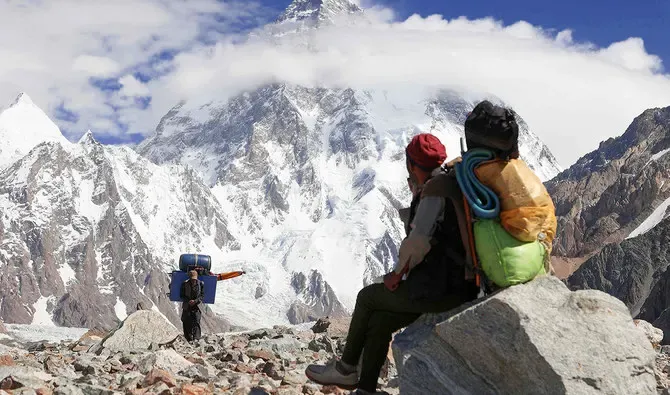
A Karakoram expedition is not delivered by one guide or one company representative.
It depends on the people preparing food, checking equipment, dividing loads, managing camps, following glacier conditions and moving the expedition beyond the road end.
Our field teams are assembled around the route, season, group size and technical objective. We do not force every expedition into the same staffing model.
Team Structure
Built around the route, not a fixed template
Every journey requires a different balance of field leadership, logistics and carrying support.
01 Local leadership
Guides and field managers coordinate the route, daily movement, guest communication and changing conditions.
02 Direct porter systems
Porter requirements, loads, stages and camp movements are coordinated through our operations team.
03 Working camp crew
Cooks, kitchen assistants and camp staff maintain food, water, shelter and daily camp systems.

M. Habib Alam Askole
Founder & Chief Executive Officer
Building Karakoram expeditions from the community where they begin
M. Habib Alam Askole is the Founder and Chief Executive Officer of K2 Expeditions & Trekking, an Askole-rooted adventure company specialising in expeditions, trekking journeys and technical climbing operations across Gilgit-Baltistan and the Karakoram.
Born and raised in Askole, the last permanent village before the Baltoro Glacier, Habib grew up close to the routes leading towards K2, Broad Peak, the Gasherbrums, Great Trango Tower, Concordia and Gondogoro La. For him, these mountains are not distant products promoted from a city office. They are part of the landscape, working culture and collective knowledge of the community he comes from founded K2 Expeditions & Trekking in 2012 to organise Karakoram expeditions through a locally managed operating structure.
He oversees company direction, expedition planning, field coordination and international guest communication. His work focuses on keeping expedition logistics connected to the guides, porters, cooks and communities that understand the Baltoro and K2 routes directly.
Company leadership · Expedition planning · Askole operations
Founder’s perspective
“The Karakoram is not simply where we operate. It is where our families live, where our field teams come from and where our responsibility begins. Every expedition should respect the mountain, the people working on it and the communities supporting it.”
The working backbone of the Karakoram
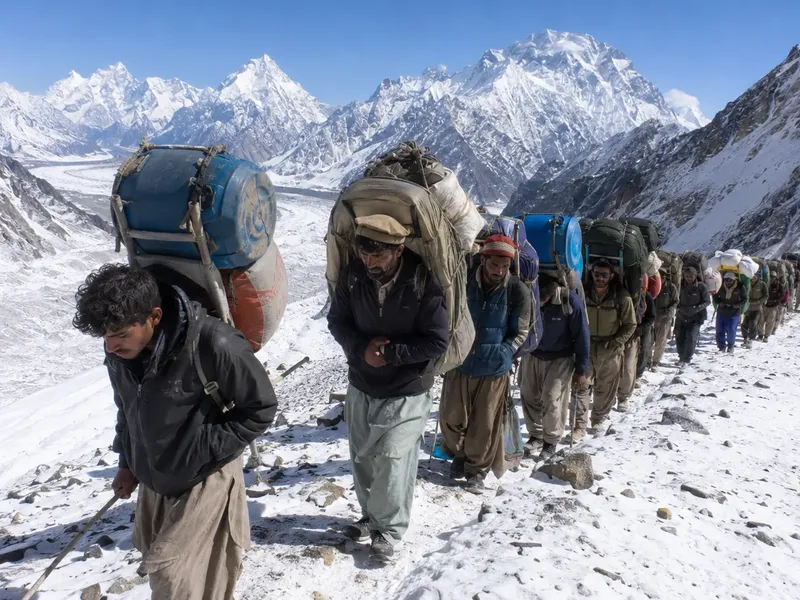
The operational backbone of any Karakoram expedition relies on a meticulously organized porter system, for beyond Askole, virtually every necessity—from tents and food to fuel, kitchen gear, climbing equipment, and shared supplies—must be manually transported through treacherous river valleys, unstable moraine, unforgiving glacier terrain, and high-altitude camps. This immense logistical effort is far from accidental; it is executed stage by stage by professional porter teams, the majority of whom hail from Askole and neighboring communities, where livelihoods and generations of field knowledge remain deeply intertwined with the Baltoro corridor. Their contribution is treated as a core, professional component of the expedition, not as mere background scenery for dramatic mountain photographs. The process begins with meticulous load planning, where porter numbers are calculated based on the route's complexity, expedition duration, total equipment weight, and group load, with assignments made prior to departure and continuously reassessed as conditions, supplies, or staffing evolve. Movement is then coordinated across recognized stages, with careful attention to camp locations and realistic daily distances; some porters may traverse the entire route, while others are deployed for specific legs as dictated by the operational plan. Throughout, the porter supervisor maintains constant field communication with guides, cooks, and operations staff to relay updates on movement, camp requirements, and changing weather or terrain conditions. Finally, the operation does not end at base camp—return logistics are equally critical, as all equipment, reusable supplies, and expedition waste must be carried back out, making the arrival at base camp only the halfway point of a demanding, cyclical endeavor.
The working backbone of the Karakoram
The working backbone of the Karakoram begins beyond Askole, where nearly everything required by an expedition—tents, food, fuel, kitchen equipment, climbing gear, and shared supplies—must be carried through river valleys, moraine, glacier terrain, and high camps, arriving at base camp not by accident but stage by stage through organized porter teams. Many of these porters come from Askole and nearby communities, their livelihoods and field knowledge deeply tied to the Baltoro corridor, and their work is treated as a professional part of the expedition, not as background decoration for mountain photographs. Load planning calculates porter numbers according to route, duration, equipment, and total group load, with assignments made before departure and reviewed as conditions or staffing change. Stage coordination organizes movement around recognized camps and realistic daily distances, with some team members working the full route and others supporting specific stages. Field communication flows through the porter supervisor, who liaises with guides, cooks, and operations staff on movement, camp needs, and changing conditions. Return logistics are equally critical, as equipment, reusable supplies, and waste must be carried back—reaching base camp is only half the operation.
Different responsibilities, one operating team
The term "team" covers several distinct roles that should not be confused: the Lead Guide handles route leadership and daily decisions; the Assistant Guide supports movement and guest care; the Porter Supervisor organizes assignments and communication; Trekking Porters carry group equipment between camps; High-Altitude Porters provide specialist support above base camp under separate terms; Cook and Kitchen Crew manage meals, water, storage, and hygiene; Camp Staff handle setup and daily operations; and Drivers coordinate road transfers from Islamabad to Askole. Trekking and climbing support are separate services—trekking porters move shared loads on routes like Baltoro and K2 Base Camp, while high-altitude porters are specialist personnel engaged per mountain and plan, with terms agreed before departure. Field standards require visible respect: roles and expectations are discussed pre-expedition, loads are managed through the supervisor, equipment matches the route and altitude, meals and shelter cover the whole team, safety information is shared, and extra work is transparently recorded. Local knowledge is working knowledge, not decoration—it determines camp placement, stage planning, river crossings, and itinerary changes, as the field team recognizes meltwater-altered crossings, unstable moraine, wind-exposed campsites, impassable roads, unrealistic stages, or supply issues, all derived from repeated work on these routes and direct communication between Askole, Skardu, and the field team.
Local work should support local communities
Local work should support local communities, and Askole serves as both the starting point of the Baltoro approach and the working base for many who support Karakoram expeditions, with a locally managed operation creating employment across interconnected roles including guides, assistant guides, trekking and high-altitude porters, cooks, kitchen assistants, drivers, transport providers, guesthouse and accommodation teams, food and equipment suppliers, and camp logistics staff. Keeping these systems tied to local communities helps preserve invaluable route knowledge and ensures continuity between expedition seasons. Team assignment is determined by the actual objective, with personnel assigned according to the specific route—whether Baltoro, K2, Biafo, Trango, or others—each requiring different knowledge and logistics; group size, which alters guide, porter, and kitchen requirements; expedition duration, as longer journeys demand larger food, fuel, and equipment systems; the technical objective, since a trekking journey and an 8,000-metre climbing expedition do not share the same staffing model; the season, as road access, river levels, snow conditions, and porter availability all fluctuate; and the group's experience level, which may recommend private support, additional guides, or specialist staff based on altitude and technical history. Final staff names are confirmed according to availability, health, route experience, and the expedition schedule, all guided by our operating principle of no anonymous outsourcing—the people planning the expedition remain connected to those carrying it out, with porter coordination, camp movement, supplies, and field communication managed through our own structure, because we keep the system focused, understanding that the Karakoram does not reward unnecessary complexity, careless promises, or city-office improvisation.
Build the right field team for your objective
Tell us your mountain or route, intended dates, group size and previous altitude experience. We will recommend a realistic team structure, porter system and operating plan based on the journey rather than forcing it into a standard package