K2 Expeditions & Trekking
8,000m Mountaineering Gear List
For K2, Broad Peak, and the Gasherbrums. Verify all life-line equipment before arriving.
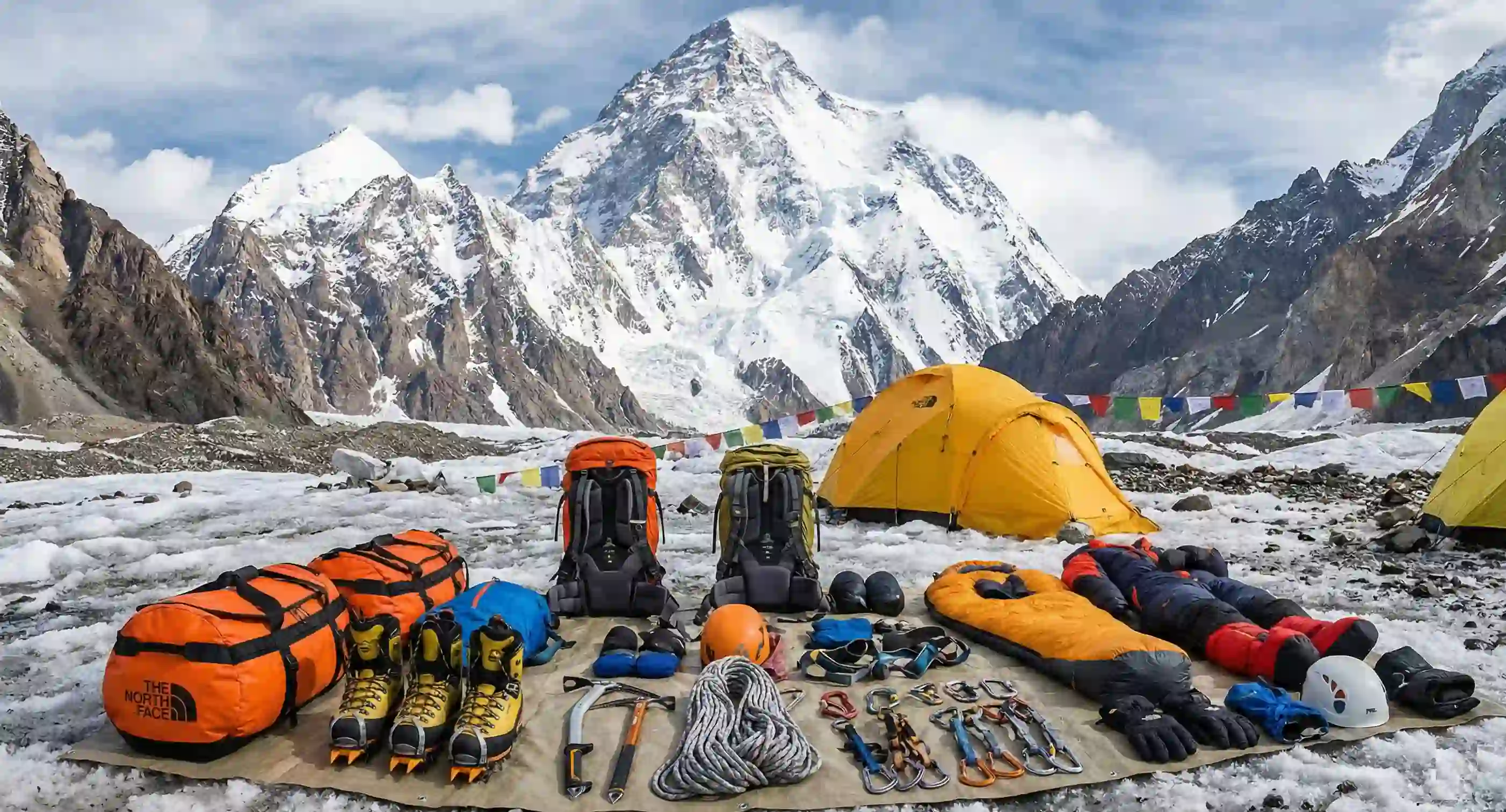
8,000m Expedition Gear List
The conclusive, life-preserving inventory required for surviving the Savage Mountain, Broad Peak, and the Gasherbrums. This list covers technical hardware, 8,000m down suits, and extreme cold mitigation for ascending above 8,000 meters.
Life-Support Equipment Warning
Climbing K2, Broad Peak or Gasherbrums involves sustained exposure to the Death Zone (above 8,000m), hurricane-force winds, and temperatures plummeting below -40°C. Equipment failure is fatal. Your gear is your only armor. All technical hardware must be UIAA certified. Double-check your down suit, mitts, and 8,000m boots for structural integrity before arriving in Pakistan.
High-Altitude Climbing Hardware
Technical life-support equipment. DO NOT compromise on quality. All gear must be UIAA certified and thoroughly tested.
Standard mountaineering piolet (60-70cm) with a leash. Lightweight but durable.
Step-in (automatic) or semi-automatic with anti-balling plates. Must fit your 8,000m boots perfectly.
Lightweight alpine harness with adjustable leg loops (must put on over down suit without removing crampons).
Large handled ascender (Petzl) for ascending fixed ropes with thick mitts on.
3 locking (HMS/Pear) and 3 non-locking wiregate.
Figure-8 or ATC Guide for descending fixed lines.
Dyneema slings (120cm) and 6mm prusik cord for safety tethers and self-rescue.
UIAA certified, lightweight, must fit over a warm beanie.
8,000m Clothing System
Built to survive -40°C temperatures and jetstream winds above Camp 3 and the Bottleneck.
The most critical item. 800+ fill goose down, fully baffled (e.g., Mountain Hardwear Absolute Zero, Marmot 8000M).
If not using a one-piece suit, an expedition-weight down jacket and insulated bib pants.
Gore-Tex Pro or equivalent. Used for the trek to BC and lower camps.
Waterproof/breathable with full side zips.
Mid-layer for climbing to C1 and C2.
Heavyweight merino wool or synthetic tops and bottoms. No cotton.
Extreme Cold Footwear
Frostbite is the greatest enemy on K2. Your boots must be flawless.
Millet Everest Summit GTX, La Sportiva Olympus Mons, or Scarpa Phantom 8000. Double-boot system with integrated gaiter.
Heavy-duty waterproof boots for the 8-day trek to Base Camp.
Down-filled, weather-resistant booties for walking around BC.
Extremely thick, high-altitude merino wool socks.
Thin synthetic socks to manage moisture and prevent blisters.
Head, Face & Hands
Unprotected skin will freeze in minutes near the summit. Snow blindness is a constant threat.
Category 4 lenses with 100% UV protection and side shields. (Bring a spare).
Essential for high winds and blowing snow above C3.
Windproof (WINDSTOPPER material) covering nose and cheeks. Neck gaiter for breathing.
Wool or fleece, must cover ears and fit under helmet.
Expedition weight (e.g., Outdoor Research Alti Mitts). Crucial for summit day.
Waterproof/insulated gloves for rope work at lower camps.
Fleece or windstopper. You will NEVER touch cold metal without these on.
Sleeping & Base Camp Survival
You will spend weeks waiting out weather windows. Maximum recovery is vital.
For High Camps. 800+ fill down, waterproof shell.
Optional but recommended so you don’t have to carry your -40 bag up and down the mountain.
Silk or fleece.
High R-value (e.g., Therm-a-Rest XTherm).
To stack under the inflatable pad on the ice.
1-liter wide-mouth Nalgene. Clearly marked. You will not leave your tent at -30°C at night at C3.
Packs & Logistics
Organizing gear for porters and high-altitude load carries.
60L–75L for carrying loads to high camps. Must be stripped down and lightweight for summit push.
35L–40L for the approach to Base Camp.
120L+ heavy-duty, waterproof duffels for mule/porter transport to BC. Lockable zippers.
For waterproofing gear inside duffels and caching gear at high camps.
For organizing small items.
Hydration & Nutrition (High Altitude)
Melting snow is your only water source. Eating is difficult in the Death Zone.
Wide-mouth 1L Nalgene bottles MUST have insulated sleeves so water doesn’t freeze instantly.
1L capacity. Critical for keeping liquids hot on summit day.
Gels, blocks, freeze-dried meals, and extreme comfort snacks. At 7,500m, you will lose your appetite; bring food you can force down.
Insulated mug, deep bowl, and a long-handled spoon (spork) for eating out of pouches.
Health, Survival & Electronics
At high camps, you are completely on your own.
Including Diamox (altitude), Dexamethasone (HACE), Nifedipine (HAPE), strong painkillers, and antibiotics.
One high-power for climbing, one lightweight for the tent. MUST run on Lithium batteries (alkaline freezes and dies instantly).
Triple the amount you think you need.
High capacity for BC. Keep small banks inside your down suit against your body on summit day to keep your phone/camera alive.
SPF 50+ minimum. The UV reflection off the glacier is blindingly intense.
Garmin inReach or similar for tracking and emergency SOS (ensure Pakistan permits are acquired).
Weight Limits & Porters
Transporting expedition equipment to K2 Base Camp requires complex logistical chains. From Islamabad to Skardu, and finally Askole to Base Camp via porters, every kilogram must be accounted for.
- Porter weight limits on the Baltoro are strictly regulated at 25kg per load. Your expedition package accounts for a specific number of loads.
- Always separate Trekking/Approach gear from High Camp/Summit gear in different, clearly labeled duffels.
- Do not put loose items like crampons in duffels without protective bags; they will shred the duffel on the mules.
Pre-Climb Checks
Boot Sizing
Will your 8,000m boots fit when you are wearing your thickest expedition socks AND your feet have swollen at altitude?
Dexterity
Can you operate your Jumar, clip carabiners, and tie a figure-8 knot while wearing your heavy down mitts?
Oxygen Compatibility
Does your face mask / balaclava system interfere with the seal of your supplemental oxygen mask?