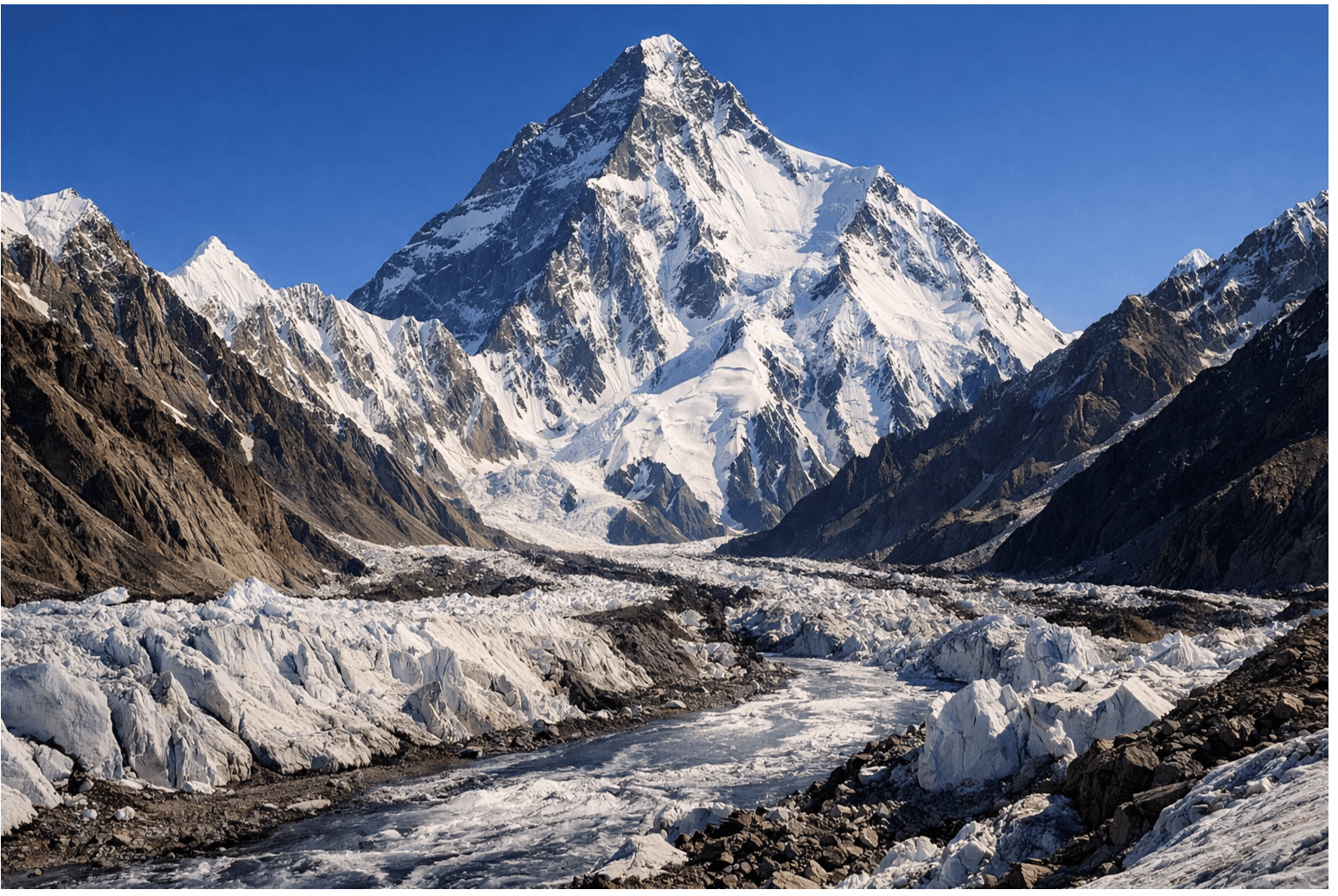
K2 Fees Climb Steeply
Pakistan’s Gilgit-Baltistan government has dramatically raised permit fees for foreign climbers and trekkers. The new schedule sets a summer K2 climbing permit at $5,000 per foreign climber (October–November $2,500; December–March $1,500). By contrast, under the old system (2023–24) a team of seven paid a collective $12,000 (≈$1,700 each) for K2. In practice this means a seven-person team that once paid $12K would now owe $35,000 – nearly a 200% increase. Pakistani climbers pay in rupees (e.g. Rs100,000 in summer vs about Rs40,000 before). Trekking permits for foreign visitors have also jumped sharply: the summer trekking fee is now $300 (up from roughly $50–$100 last year), with $200 in autumn and $100 in winter.
Who’s Affected
These hikes fall squarely on international climbers and trekkers. Foreign mountaineers attempting K2 or Pakistan’s other 8,000m peaks now face several-thousand-dollar fees per person. (For example, Broad Peak/Gasherbrum/Nanga Parbat permits rose from about $9,500 per seven-person group to $4,000 each.) Lower-altitude trekking routes that were once free or very cheap now require paid permits. Even commercial expeditions – which often absorb large costs – find budgets swelling. Independent and low-budget teams stand to suffer most: as one guide warned, the hike is “not good for promoting adventure tourism in Pakistan”. Small alpine-style teams on 6,000–7,000m peaks (who were previously lured by Pakistan’s low fees) may look elsewhere or cancel plans. In contrast, domestic climbers pay flatter fees in local currency (e.g. Rs100,000 in summer), but even these have increased significantly.
Reactions from the Field
News of the fee hikes has drawn sharp criticism from tour operators and climbers. Jasmine Tours’ Ali Porik bluntly said the increases would hurt Pakistan’s adventure brand. Even veteran climbers posted concerns online: Mingma “Mingma G” Sherpa (Imagine Nepal) warned it “could be our last season in Pakistan” if costs triple. Pakistani media and expedition groups report that hundreds of foreign climbers and trekkers have already been stranded or had trips cancelled because the authorities are not issuing permits under the new schedule. The Pakistan Association of Tour Operators (PATO) sought a court stay, and a tribunal briefly put the fee increase on hold. In practice, hundreds of applicants are stuck: “Over 200 foreign trekkers and mountaineers… have already applied… but the tourism department has not issued permits,” Dawn reported. PATO president Niaz Ahmed urged swift resolution; outfitters from Karakoram expeditions to trekkers voiced alarm that the uncertainty and cost will scare visitors away.
Why the Hikes?
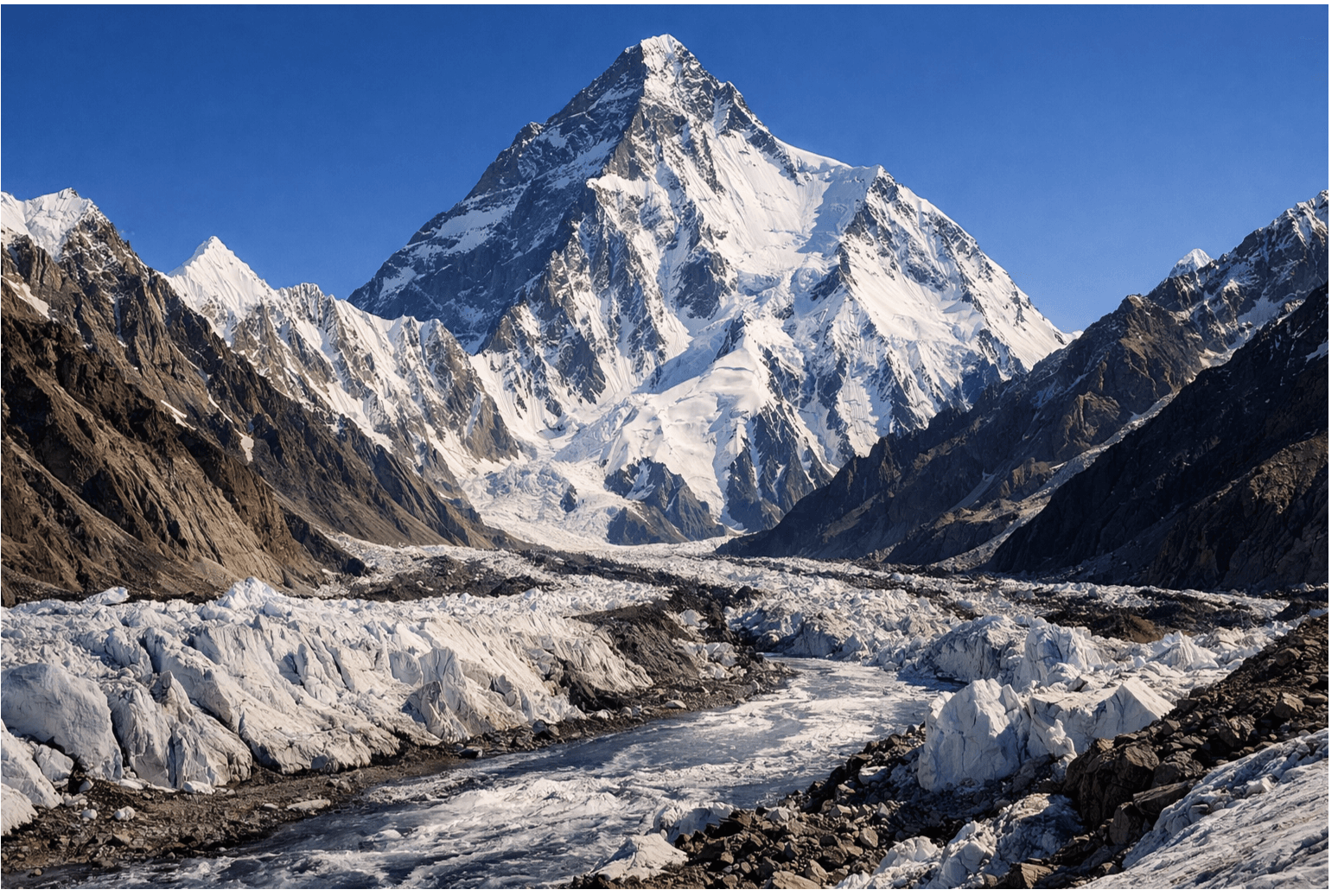
Gilgit-Baltistan authorities defend the increases as a first rise in 25 years aimed at conservation and safety. Tourism Director Iqbal Hussain emphasized the surge in commercial expeditions and growing crowds on fragile peaks. “A gradual surge in commercial expeditions has created issues that could be detrimental to the mountains if not contained,” he said. The hikes, he explained, help “protect the environment” and manage the rush on K2 – often called the “Savage Mountain” – where 86 climbers have died even in good weather. He noted that Pakistan’s fees remain lower than some neighbors (Everest permits in Nepal are $15,000), implying room to grow. Other stated measures include mandatory insurance for high-altitude porters (Rs2 million) and environmental levies to be paid into local tourism funds, but the headline grabber has been the permit costs themselves.
Broader Implications
The fee surge comes at a critical moment for Pakistan’s mountain tourism. Already hit by extreme weather and regional instability, foreign arrivals have plunged. Local officials report only ~270 foreign climbers visited Gilgit-Baltistan last summer, vs. over 2,000 in recent seasons. Tour operators directly link much of this collapse to the permit hikes (and visa delays). One PATO member noted that 90% of locals (hoteliers, guides, porters, roadside vendors) depend on climbers and trekkers for income. As one experienced Balti porter put it: “Usually this would be our busiest time… but this season has turned into a nightmare”. With international tourists canceling or rerouting to cheaper alternatives (for example, Nepal has slashed fees on many peaks), local economies are reeling.
The hikes also reshape the global mountaineering picture. Pakistan’s Karakoram – long a bargain for peak-baggers – will soon cost more. Even after the hike, K2’s $3,500 permit (current 2025 rate) is still below Everest’s cost, but the gap has narrowed. Independent climbers on limited budgets will struggle: paying triple the permit fee (plus hundreds for trekking permits) may put classic Pakistani climbs out of reach. As one expert noted, many small teams had already been scouting alternate destinations in response to the proposed fees. In short, the higher price tag may curb some climbing traffic (as intended) – but it also risks sidelining exactly the adventurous clients who built Pakistan’s adventure-tourism boom.
What’s Next?
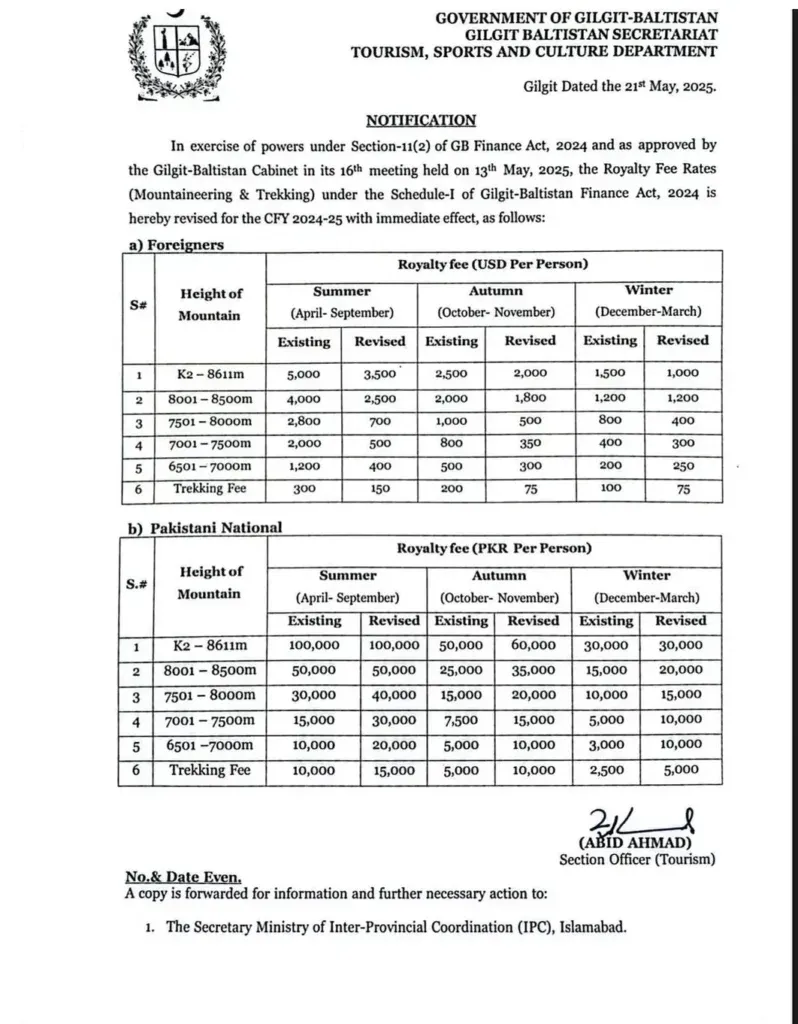
For now, the situation remains fluid. A local court challenge has kept the hikes in limbo through early 2025, and a final resolution is pending. Climbers are watching closely whether Gilgit-Baltistan will implement the new rates or adjust them again. However this plays out, stakeholders agree on one point: Pakistan’s mountains have drawn the world’s attention, and how access is managed (and priced) will profoundly affect the region’s people and economy. The hope among many is that Pakistan can balance environmental protection with economic opportunity – but the steep climb in fees has underscored the delicate path ahead.
Sources: Official Gilgit-Baltistan notifications and tourism department notices