
The Ultimate K2 Base Camp Trek Packing Guide: Preparing for the World’s Most Iconic Trek
There’s something almost sacred about preparing for K2 Base Camp. As you spread gear across your living room floor, weighing each item and imagining the Baltoro Glacier’s crevassed expanse, you’re not just packing—you’re engaging in a ritual that connects you to every explorer who’s dreamed of standing at the foot of the Savage Mountain. The Karakoram doesn’t forgive poor preparation, but with the right gear meticulously chosen and packed, you’ll transform a potentially grueling expedition into the adventure of a lifetime.
Critical Pre-Trek Warning: The Skardu Gear Reality
Before we dive into the list, let’s address a crucial update that changes everything about your preparation strategy. Many trekkers arrive in Skardu assuming they can rent or purchase forgotten items locally. Please note that EBT DOES NOT rent any personal gear or equipment. While Skardu does have two small gear shops with limited outdoor equipment, their stock is minimal and unreliable. You cannot count on finding quality replacements here. The harsh reality is that these shops might have a generic down jacket or a pair of gloves, but they won’t carry the specialized, expedition-grade equipment this trek demands.
Our strongest advice: arrive in Pakistan with every single item on this list. Do not rely on local shops for anything beyond perhaps a spare roll of toilet paper or some Pakistani rupees. This isn’t just about convenience—it’s about safety at 5,000 meters where a subpar sleeping bag or inadequate boots can lead to serious consequences.
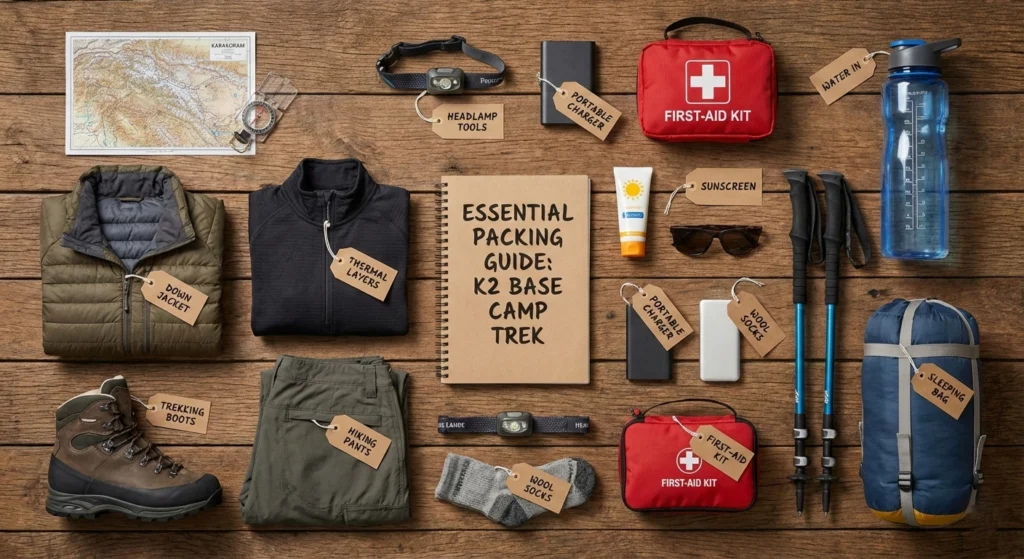
Understanding the Porter System: Your Two-Bag Strategy
The K2 Base Camp trek operates on a traditional porter system that’s both a logistical necessity and a cultural heritage. Understanding this system is fundamental to packing correctly.
Porter Allowance: Every trekker receives a 12.5 kilogram allowance for their main duffel bag. This isn’t a suggestion—it’s a hard limit enforced by weighing bags before the trek begins. Porters, incredibly strong men from villages like Askole, will carry these duffels throughout the journey, but they deserve respect and fair treatment. Overloading your bag beyond 12.5 kg means either repacking at the last minute or paying substantially for additional porter services.
Weight Distribution Strategy:
| Bag Type | Weight Limit | Carried By | Purpose |
|---|---|---|---|
| Expedition Duffel | 12.5 kg maximum | Porter | All main gear, sleeping system, most clothing |
| Daypack | 5-7 kg (self-imposed) | You | Daily essentials, water, camera, layers |
| Carry-On/Luggage | Unlimited (left in Skardu) | Hotel storage | Clean clothes, travel items, non-essentials |
The duffel is your floating base camp. It carries your sleeping bag rated to -20°C, your heavy down parka for Concordia’s sub-zero nights, your alpine boots, crampons, helmet, harness, sleeping pad, and those extra snacks you’ll crave at 4,000 meters. The daypack is your lifeline on the trail—light enough that you forget it’s there, but complete enough that you could survive a day separated from your main gear.
Clothing and Layers: The Foundation of Comfort
In the Karakoram, you’ll experience four seasons in a single day. Mornings at Paiju might start at -5°C, afternoons on the Baltoro could reach 20°C in direct sun, and evenings at Goro II plunge back to teeth-chattering cold. The only way to handle this is through a sophisticated layering system that lets you adapt without unpacking your entire duffel.
Base Layers: Your Second Skin
Pack 2-3 complete sets of moisture-wicking thermal tops and bottoms. These aren’t your cotton long johns from childhood—these are high-performance garments that will be against your skin for 14+ days of strenuous hiking.
Fabric Choice: Merino wool is the gold standard for its odor resistance and temperature regulation, but quality synthetic blends from Patagonia or Arc’teryx perform excellently and dry faster. At altitude, your body works harder than you imagine, sweating even in freezing temperatures. Cotton would soak that sweat and become a hypothermia risk within minutes of stopping.
Pro Tip: Rotate between two sets, washing one in streams when possible (use biodegradable soap!), while the other dries on your pack. Keep the third set sealed in a dry bag for sleeping only—having dry sleep clothes is a morale booster beyond measure.
Insulating Mid-Layers: Trapping Heat
Your mid-layer arsenal needs versatility. Pack 2-3 lightweight fleece or wool sweaters/jackets in varying weights. Think of this as your temperature control dial.
- Lightweight fleece (100-weight): For active hiking in cool but not freezing conditions
- Mid-weight fleece (200-weight): For rest stops and evenings in camp
- Heavyweight option: Consider a synthetic insulated jacket like Patagonia’s Nano-Puff for maximum warmth-to-weight ratio
Additionally, carry a high-quality down jacket with windproof shell fabric. This isn’t your city parka—this needs to be mountaineering-grade with at least 650-fill power down, preferably 800-fill. It should compress to the size of a water bottle but loft up to save your life during a -15°C night at Concordia.
Waterproof Shells: Your Weather Armor
The Karakoram’s weather makes its own rules. A perfect morning can explode into a snowstorm by afternoon. Your waterproof, breathable jacket and pants (Gore-Tex Pro or equivalent) are non-negotiable insurance policies.
Jacket Features to Demand:
- Helmet-compatible hood (even if you’re not climbing, it fits over beanies)
- Pit zips for ventilation during uphill slogs
- Longer cut to cover your lower back when wearing a pack
Pant Features: Full-length side zippers let you put them on without removing boots—crucial when weather changes suddenly. Reinforced insteps prevent crampon punctures if you venture onto technical terrain.
Backup Option: A lightweight sil-nylon poncho weighs mere grams and can cover both you and your pack in sudden downpours. Many experienced trekkers carry one as an emergency backup.
The Cold-Weather Fortress: Heavy Down/Parka
This is what lives in the bottom of your duffel until you reach Concordia. A heavy down parka rated to at least -25°C is mandatory. Nighttime temperatures regularly drop below -15°C, and wind chill makes it feel far worse. This isn’t for hiking—it’s for standing outside marveling at K2’s north face at sunset without losing fingers to frostbite.
Look for parkas with:
- 800+ fill power down
- Water-resistant shell fabric
- Large hood with fur or synthetic ruff
- Long length covering your thighs
Head and Face: Where You Lose Most Heat
At high altitude, your head is simultaneously your greatest vulnerability and your easiest protection point.
Essential Items:
- Warm wool beanie: No synthetic substitutes—wool insulates even when damp. Ensure it covers your ears completely.
- Neck gaiter/balaclava: Buff-style gaiters are versatile for sun, wind, and cold. A full balaclava provides better protection for Gondogoro La crossings.
- Sun hat/cap: A wide-brimmed hat with neck flap is ideal. The sun at 5,000 meters delivers UV radiation equivalent to Antarctic conditions.
- UV-blocking sunglasses: Category 4 lenses are mandatory. The glacier’s reflectivity can cause snow blindness in hours. Bring a backup pair—losing your only sunglasses can end your trek.
Hand Protection: Layered Defense
Frostbite starts in the extremities. Your handwear system should mirror your body layering.
Required Gloves:
- Lightweight liner gloves: Thin merino or synthetic for moderate conditions and camp tasks
- Insulated waterproof gloves: For snow and freezing temperatures
- Expedition mittens: Down or synthetic fill for extreme cold at Concordia and higher camps
Always dry gloves inside your sleeping bag at night. Moist gloves freeze solid by morning and are useless.
Footwear: Your Connection to the Mountain
This is the most critical single piece of gear. Sturdy trekking boots with ankle support aren’t optional—they’re survival equipment. The trail from Askole to K2 Base Camp is a nightmare of loose scree, boulder fields, glacier ice, and river crossings.
Boot Requirements:
- Minimum 3-season waterproof/breathable construction
- Stiff midsole for kicking steps in snow
- High ankle cuff to prevent twists on uneven terrain
- Already broken in (more on this below)
Break-In Protocol: Purchase boots 3-4 months before departure. Wear them daily—on walks, at work, around town. Gradually add weight and distance. By the time you reach Pakistan, you should have 100+ miles on them. New boots on the Baltoro Glacier guarantee debilitating blisters that can end your trek.
Gaiters: Knee-high gaiters keep snow, rocks, and dust out of your boots. Essential for glacier travel and scree slopes. Choose waterproof/breathable models with secure underfoot straps.
Camp Shoes: Evening Relief
After 8 hours in heavy boots, your feet will scream for freedom. Lightweight sandals or camp shoes (Crocs, Teva sandals, or even lightweight sneakers) let your feet breathe and recover. They also serve as backup footwear if your boots fail.
Socks: The Blister Prevention System
Pack 3-4 pairs of thick wool/synthetic trekking socks plus 2-3 pairs of liner socks. This is a medical system, not just clothing.
- Trekking socks: Darn Tough, Smartwool, or Falke mountaineering socks
- Liner socks: Thin synthetic to wick moisture and reduce friction
Daily Sock Strategy: Change socks at lunch, airing out the morning pair on your pack. Never wear damp socks—blisters form rapidly. At night, sleep in a clean, dry pair to aid recovery.
Underwear and Sleepwear: The Unsung Heroes
Pack enough moisture-wicking underwear for 7-8 days, as laundry opportunities exist at Paiju and Goro II. For sleep, dedicate one thermal top and bottom set that never leaves your tent. Having guaranteed dry sleep clothes is a psychological comfort that improves rest quality dramatically.
Sleeping and Camping Gear: Your Mobile Home
You’ll spend half your time in tents on glacier ice. Your sleeping system’s warmth-to-weight ratio directly impacts your safety and sanity.
Sleeping Bag: Your Survival Cocoon
A down sleeping bag rated to at least -20°C (-4°F) is mandatory. This is not the place to save weight or money. The night you spend at Concordia at 4,600 meters will test your bag’s limits. Western Mountaineering, Feathered Friends, and Rab make expedition-grade bags worth their weight in gold.
Bag Features:
- Water-resistant down or synthetic fill
- Draft collar and tube to seal in warmth
- Full-length zipper for ventilation on warmer nights
Sleeping Bag Liner: A silk or thermal liner adds 5-10°C of warmth and keeps your expensive bag clean. On a three-week trek without showers, this is hygiene insurance.
Sleeping Pad: Insulation from the Ice
The glacier beneath you is a heat sink. An insulating pad with R-value of 5+ is essential. Most trekkers use a two-pad system:
- Inflatable pad: Therm-a-Rest NeoAir XTherm (R-value 6.9) for comfort and insulation
- Foam pad: Thin closed-cell foam pad for backup and extra insulation
Place the foam pad under the inflatable for maximum warmth and puncture protection.
Backpacks and Bags: Organized Packing
Expedition Duffel: Your Porter’s Load
The 100-120L waterproof expedition duffel is your main gear container. Pack it strategically:
Duffel Contents Checklist:
- Sleeping bag and liner
- Down parka and extra insulation
- Camp clothes and sleepwear
- Alpine boots (worn on feet or packed)
- Crampons, helmet, harness (if technical)
- Sleeping pad
- Excess snacks and toiletries
- Backup gloves and hats
Weight Management: Use a luggage scale at home. Pack, weigh, remove items, repack. Aim for 11.5 kg to leave margin for last-minute additions. Remember: every extra kilogram costs you in porter fees and porter welfare.
Daypack: Your Daily Companion
A 25-35L hiking pack with good suspension is ideal. This carries:
- 2-3L water
- Sunscreen and sun hat
- Extra insulation layer
- Camera and batteries
- Packed lunch and snacks
- First aid kit (daily essentials)
- Passport and permit copies
Essential Daypack Features:
- Hydration bladder compatibility
- Hip belt to transfer weight
- Sternum strap for stability
- Side pockets for water bottles
- Rain cover (or pack everything in dry bags)
Dry Bags and Organization
Bring 3-4 waterproof dry bags in various sizes:
- Large (20L): Sleeping bag and clothes
- Medium (10L): Electronics and valuables
- Small (5L): Toiletries and first aid
Color-coding helps you find gear in a dim tent. Stuff sacks also compress clothing to maximize space.
Trekking Poles: Your Extra Legs
A pair of adjustable trekking poles reduces knee strain by up to 40% on descents and provides stability on scree and ice. Set them to 120cm for flats, shorten for uphill, lengthen for downhill. Many trekkers swear they wouldn’t have made it without them.
Personal Items and Health: Staying Whole
Toiletries: Minimalist Hygiene
At altitude, luxury is weight. Pack:
- Biodegradable soap/shampoo (3oz bottles max)
- Travel toothbrush and mini toothpaste
- Quick-dry microfiber towel (medium size)
- Wet wipes (unscented, biodegradable)
- Hand sanitizer (small bottle, refilled from larger)
- Personal hygiene items (feminine products, etc.)
- Extra toilet paper: Remove cardboard core, flatten, store in ziplock
Sun Protection: The Invisible Enemy
The Karakoram sun is brutal. UV intensity increases 10-12% per 1,000m altitude gain. At Concordia, you’re receiving nearly double the UV radiation of sea level.
Requirements:
- SPF 50+ sunscreen: Broad spectrum, water-resistant. Apply liberally to all exposed skin including nostrils and ears.
- SPF lip balm: Reapply hourly. Cracked lips at altitude become infected easily.
- Zinc oxide: For nose and cheek protection on glacier days
First Aid Kit: Self-Sufficiency
Your kit should handle common trekking injuries without relying on the group medic.
Comprehensive First Aid Checklist:
| Category | Items | Quantity |
|---|---|---|
| Pain Relief | Ibuprofen, Paracetamol | 30 tablets each |
| Blister Care | Moleskin, Compeed pads, blister tape | Full box |
| Wound Care | Antiseptic wipes, gauze, medical tape | 20 wipes, 10 gauze |
| Altitude | Acetazolamide (Diamox) – prescription | As prescribed |
| Stomach | Anti-diarrheal, oral rehydration salts | 20 tablets, 10 packets |
| Antibiotics | Broad-spectrum (prescribed) | Full course |
| Personal | Any prescription medications | Full supply + 50% extra |
Altitude Medication: Start Diamox prophylaxis 24 hours before ascent if recommended by your physician. Know the signs of HAPE and HACE—your life depends on it.
Water Purification: The Glacier’s Gift
Glacier water looks pristine but carries giardia and bacteria. Water purification tablets (Aquamira or Potable Aqua) or a LifeStraw/LifeSaver bottle are essential. Boiling is reliable but fuel-intensive. Many trekkers use a two-stage system: filter then chemical treatment.
Accessories and Electronics: Capturing the Journey
Hydration Systems
Carry at least 2 liters capacity at all times. The best system is redundancy:
- 1L insulated bottle: Prevents freezing at high camps
- 1L backup bottle: Collapsible Platypus bottles save space when empty
- Optional 2-3L hydration bladder: Convenient but can freeze in hoses
Insulation Trick: Blow air back into hoses after drinking to prevent freezing. Store bottles upside down at night (ice forms at top, bottom remains liquid).
Power Management: The Electricity Desert
Above Skardu, there are no outlets. Your power strategy must be self-contained.
Power System:
- Power bank: 20,000 mAh minimum, preferably 26,800 mAh (airline limit)
- Solar charger: Optional but helpful. Choose lightweight, flexible panels
- Device management: Airplane mode, low brightness, download maps offline
Battery Life Extenders:
- Keep electronics in sleeping bag at night
- Use lithium batteries (perform better in cold)
- Bring spare camera batteries (cold drains them in hours)
Lighting: Seeing in the Dark
A quality headlamp with 200+ lumens is critical for:
- Pre-dawn starts (common for pass crossings)
- Nighttime tent activities
- Emergency situations
Headlamp Features:
- Red light mode (preserves night vision)
- Lock function (prevents accidental activation)
- Extra batteries: Bring 3x sets, store in warm place
Miscellaneous Essentials: The Details Matter
Documents: Your Freedom Papers
Store these in a waterproof document pouch on your person at all times:
- Passport (original + 2 color copies)
- Pakistan visa
- K2 trekking permit
- Travel insurance documents (with evacuation coverage)
- Emergency contact information
- Flight itineraries
Backup Strategy: Email scanned copies to yourself and a trusted contact. Store digital copies on your phone and in cloud storage.
Cash: The Local Economy
Pakistan is largely cash-based. Bring:
- Pakistani Rupees: 50,000-70,000 PKR in small denominations (100s, 500s)
- US Dollars: $200-300 in small bills ($1, $5, $10) for emergencies
ATMs: Only reliable in Skardu. Withdraw maximum limits there. Above Askole, cash only.
Snacks: Morale and Energy
Supplement local meals with high-energy Western snacks:
- Mixed nuts (1kg)
- Energy bars (20-30 bars)
- Dark chocolate (high cocoa content)
- Dried fruit and jerky
- Electrolyte tablets (Nuun or similar)
Calorie Target: You’re burning 4,000-6,000 calories daily. Local dal and rice provides bulk, but familiar snacks boost morale when appetite wanes at altitude.
Optional Technical Gear: For the Adventurous
If your itinerary includes Gondogoro La Pass or technical glacier travel,
| Item | Purpose | Rental Option |
|---|---|---|
| Crampons | Ice traction | Available in Skardu, but test fit before trek |
| Ice Axe | Self-arrest tool | Rent in Skardu |
| Climbing Harness | Glacier travel | Rent in Skardu |
| Helmet | Falling ice protection | Rent in Skardu |
| Slings/Carabiners | Safety anchors | Bring your own |
Standard K2 Base Camp trek (no pass) does not require this gear. However, conditions can change, and having basic crampons can be wise even in summer.
Entertainment and Mental Health: The Waiting Game
Weather delays are common. Pack for downtime:
- Kindle/e-reader (loaded with books)
- Deck of cards
- Journal and pen
- Lightweight headphones
- Travel chess/checkers
Mental stamina is as important as physical. These items weigh little but preserve sanity during 3-day storms at Paiju Camp.
Weight Management: The Final Check
The night before leaving Skardu, weigh everything. Your duffel should be exactly 12.5 kg. Your daypack should feel comfortable with 6-7 kg. If it exceeds this, you have hard decisions to make. Remember: every ounce matters when you’re at 5,000 meters.
Last-Minute Repack Strategy:
- Lay out all gear
- Weigh each item (use digital scale)
- Identify redundancies
- Remove “maybe” items
- Re-weigh and adjust
The porters from Askole work incredibly hard. Respecting the 12.5 kg limit shows appreciation for their labor and ensures ethical treatment. Overpacking doesn’t just cost you money—it costs them physical strain.
Final Thoughts: The Mindset of Packing
Packing for K2 Base Camp is an exercise in humility. You’re not packing for every possible scenario—you’re packing for the most likely ones while accepting that the mountain makes its own rules. The goal isn’t to be comfortable like at home; it’s to be safe and functional in an extreme environment.
Double-check every item against this list three days before departure. Test your entire system on a local overnight hike. Sleep in your sleeping bag on your pad in your tent. Wear your boots on a 10-mile hike. Discover issues at home, not at Goro II.
The right gear, meticulously chosen and properly packed, becomes invisible. It works so well you forget about it, allowing you to focus on what matters: the sheer, overwhelming presence of K2, the camaraderie of your team, and the transformation that happens when you push yourself to the edge of your capabilities.
Always verify final requirements with your K2 Expeditions & Trekking guide, as conditions and recommendations evolve. The mountain is timeless, but our understanding of how to safely travel there continues to grow.
Weather Reality Check: The Karakoram is chaotic. Pack for 30°C sun and -20°C nights—sometimes in the same day. Layers are your superpower.
One last piece of advice from our Askole guides: “Pack your fears, not your gear.” Bring what you need to feel safe, but remember—every extra kilo above 12.5 comes out of your wallet and your porter’s back. Travel light, travel smart, and the Karakoram will reward you with the trek of a lifetime.